Most adults walk into a Jiu-Jitsu academy for one reason and stay for a completely different one. They come to get in shape, or because they want to know they could protect their family, or because they need something that isn't work and isn't a screen. What keeps them on the mats five years later is usually something they never thought to ask about.
This is an honest look at what Brazilian Jiu-Jitsu does for adults (the fitness, the mental side, the self-defense), including the parts that are hard.
The workout: what an hour on the mats does
Jiu-Jitsu is a strange kind of exercise, because you rarely notice you're doing it. There's no rep count to endure and no clock to watch. You're solving a physical problem with another person, and an hour disappears.
Physiologically, a class is closer to interval training than to a steady jog. You'll cycle through short, maximal bursts (escaping, sweeping, scrambling) separated by lower-intensity positional work. Layered on top is a lot of isometric effort: holding frames, gripping, bracing, carrying another adult's weight. It's why beginners are often surprised that their forearms, core, and hips are the first things to complain.
- Full-body resistance work against a live, resisting human rather than a fixed machine path
- Repeated anaerobic bursts that build real conditioning without a treadmill
- Grip and core strength that shows up in everyday life almost immediately
- Hip mobility and body awareness: most desk-bound adults gain more range in six months of Jiu-Jitsu than in years of intending to stretch
The fitness effect shows up in research too: regular Brazilian Jiu-Jitsu practice is linked to measurable gains in physical fitness alongside the development of core resilience competencies in those who train.Brazilian Jiu-Jitsu: Building Mental Resilience & Physical Fitness (2023).
How it compares to the other things you could be doing
Jiu-Jitsu isn't the best possible choice for every single goal, and it's worth being straight about that. If you want maximum raw strength, a barbell beats it. If you want pure aerobic capacity, running beats it. Where Jiu-Jitsu wins is breadth, and the fact that people keep showing up for it.
| Activity | Strength | Cardio | Self-Defense | Stress Relief | Community | Stays Interesting |
|---|---|---|---|---|---|---|
| Gym / weights | Excellent | Moderate | None | Moderate | Low | Low |
| Running | Limited | Excellent | None | Strong | Moderate | Low |
| CrossFit | Excellent | Strong | None | Moderate | Strong | Moderate |
| Yoga | Moderate | Limited | None | Excellent | Moderate | Moderate |
| Brazilian Jiu-Jitsu | Strong | Strong | Excellent | Excellent | Excellent | Excellent |
An honest read: a barbell builds more raw strength and running builds more pure aerobic capacity. Jiu-Jitsu’s advantage is that it does most things well, adds a skill nothing else on this list does, and is hard to get bored of.
The mental side: the reason most people stay
Ask a room of adult students why they train and almost nobody leads with fitness. They talk about the hour itself.
Jiu-Jitsu is unusually good at forcing presence. You physically cannot rehearse a work conversation or spiral about an email while someone is methodically trying to pass your guard. The problem in front of you is immediate and concrete, and it crowds everything else out. People describe it as the only hour of the day their brain is quiet, and they leave lighter than they arrived.
There's a second, slower effect. Jiu-Jitsu is a structured way to be bad at something as an adult, which is an experience most of us stop having after about age 25. You get stuck, you get escaped, you tap, and you find out that none of it is a catastrophe. That recalibration has a way of following people off the mats.
Real self-defense: the part nothing else on that list offers
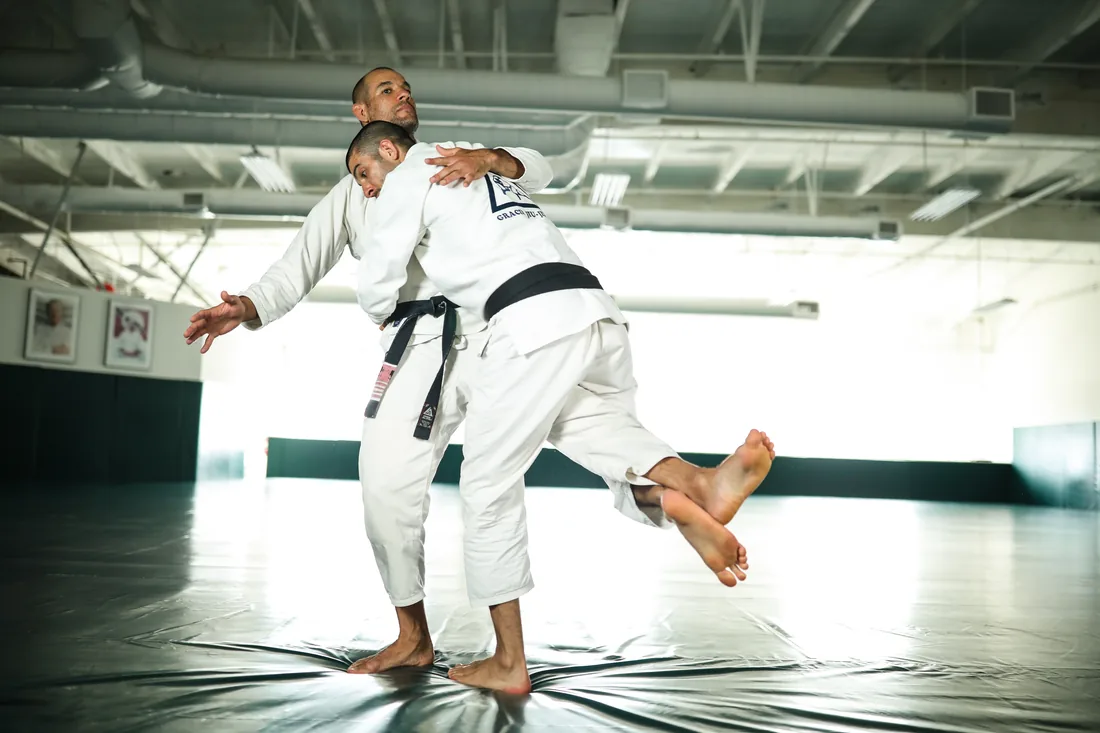
Every benefit above you could get somewhere else. This one you can't. Gracie Jiu-Jitsu was built so a smaller, weaker person could defend against a larger, stronger attacker using leverage and control rather than strength or strikes, and it's honest about where real fights end up: the clinch and the ground.
The distinction that matters for adults is control without damage. Being able to neutralize a situation and hold it there (rather than escalating into a striking exchange) is usually the smartest option legally, ethically, and practically. Our adult beginner program, Gracie Combatives®, is 36 techniques chosen for exactly that.
A 2025 multicenter study found that a theory-driven, Brazilian Jiu-Jitsu-based self-defense program measurably improved nurses’ ability to handle real-world workplace violence: adults with no martial arts background learning practical skills that held up under stress.Chang, Y.C. (2025). “Effectiveness of a theory-driven Brazilian jiu-jitsu-based medical self-defense training for nurses facing workplace violence: A multicenter quasi-experimental study.”
What changes, month by month
People want a timeline, so here's a realistic one for an adult training about twice a week. Everyone's different, but the shape of it is remarkably consistent:
- Month 1: survival and breathing. You're tense, you grip too hard, and you gas out. This is normal and it passes faster than you expect. The win is learning to breathe and relax under pressure.
- Months 2–3: the fog lifts. Escapes start working. You stop panicking from bad positions. Your conditioning quietly improves and you notice you're not sore for three days anymore.
- Months 4–6: pattern recognition. You begin to see what's coming instead of only reacting to it. This is usually when it stops feeling like exercise and starts feeling like chess.
- Months 6–12: calm. The single biggest change most adults report. Positions that used to trigger panic are now just problems to solve. That composure is the thing that transfers to everything else.
The honest downsides
Any article that only lists benefits isn't worth much, so:
- Your ego takes a beating early. Smaller, lighter people will control you. That's the whole point of the art, but it stings for the first month.
- You will be sore in new places. Especially your neck, forearms, and hips.
- It takes real time. This isn't a six-week challenge. The benefits compound over months and years.
- There is some injury risk, as with any physical activity. It's meaningfully reduced by cooperative training and no competitive sparring for the first 8–12 months, but it isn't zero.
“I’m too old / too out of shape to start”
This is the most common reason adults never begin, and it's backwards. Waiting to get in shape before starting Jiu-Jitsu is like cleaning before the housekeeper arrives: the training is the getting in shape. Because the art rewards leverage and timing over strength and speed, it's one of the rare physical pursuits where the 45-year-old who has been training two years routinely handles the 22-year-old athlete who hasn't.
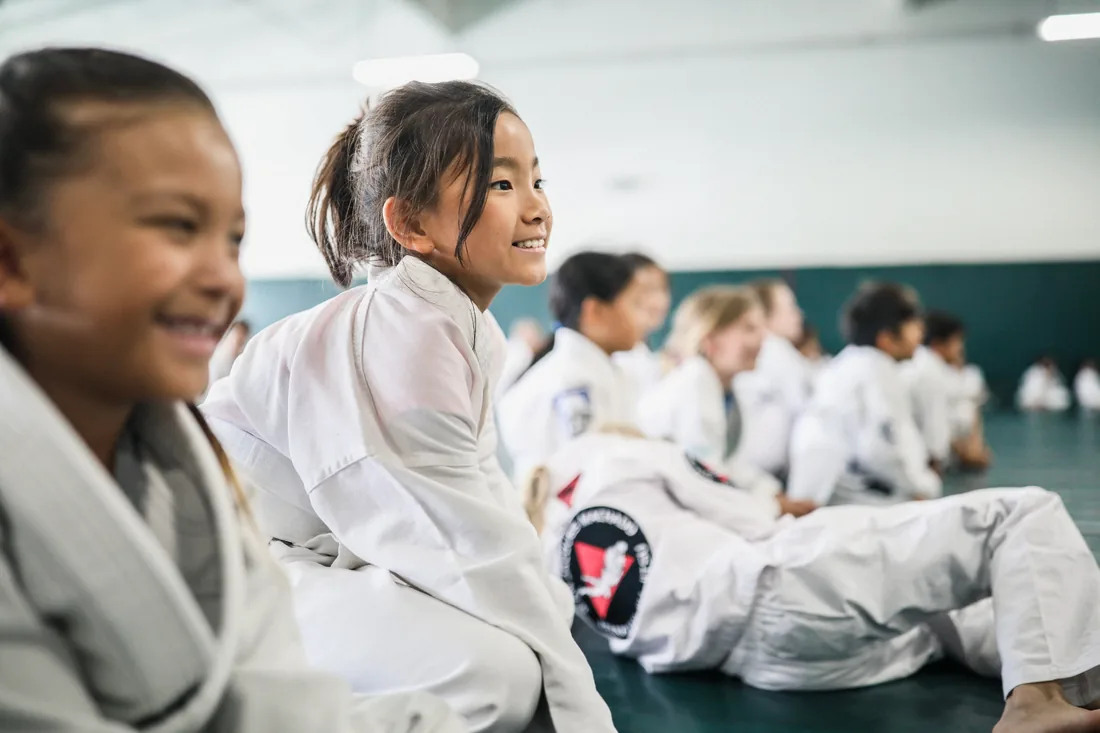
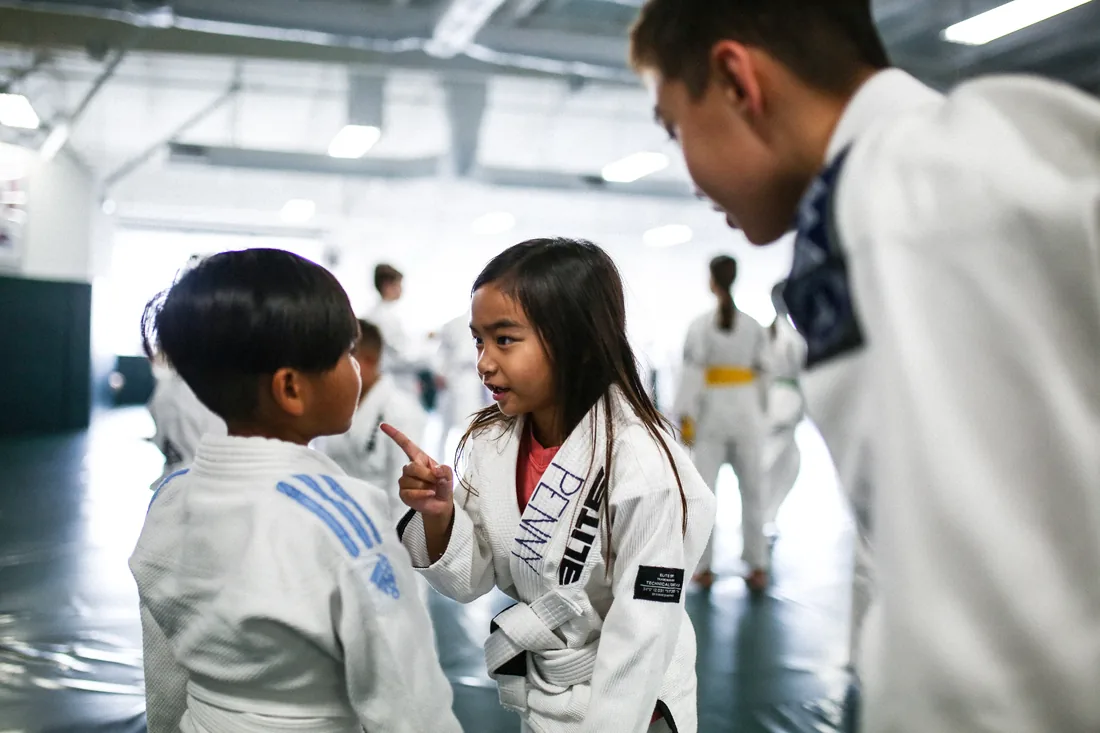
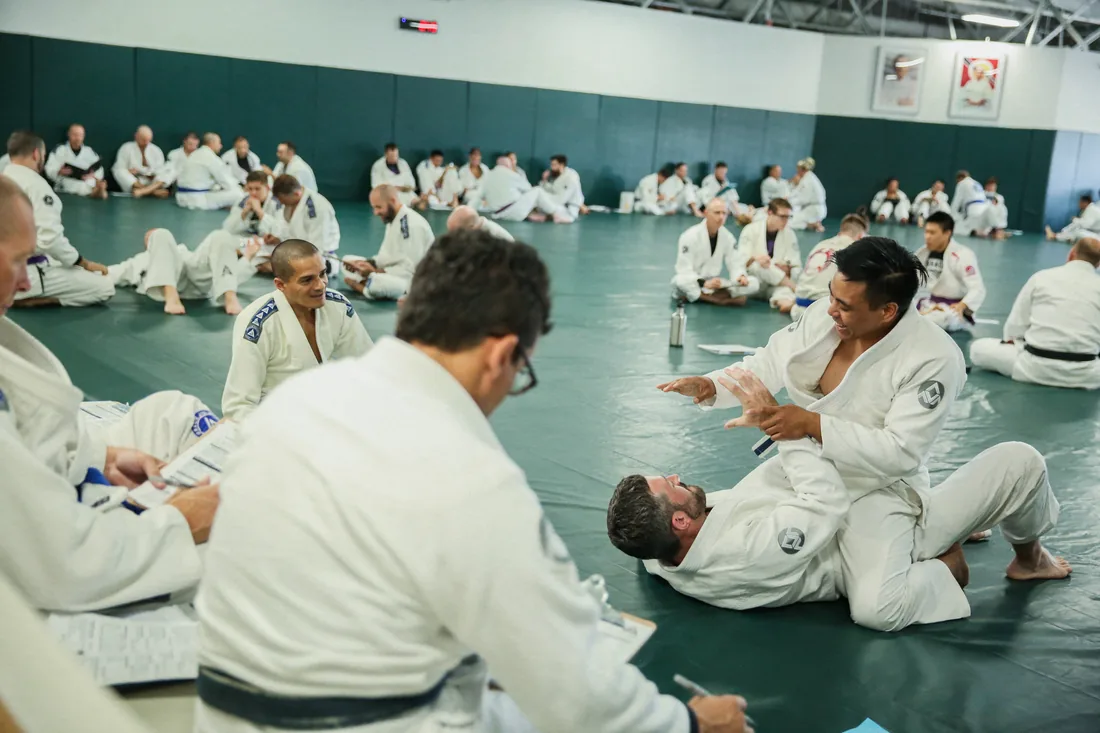
Our students range from age 3 to 90+. Adult beginners start in Gracie Combatives® alongside other beginners, with no competitive sparring, and progress to the Master Cycle® once they've earned their belt. If group classes feel intimidating at first, private lessons are a comfortable on-ramp, and plenty of people train as a family.
Try it free for 10 days in Warwick
You can't read your way to knowing whether this is for you. As an official Gracie Certified Training Center, we teach the authentic curriculum in a safe, welcoming room full of adults who started exactly where you are. Explore our Warwick programs, see what it costs and what to wear, then claim your free 10-day trial. No card, no commitment, and no experience required.
Frequently asked questions
Is Brazilian Jiu-Jitsu a good workout for adults?
Yes. A single class combines full-body resistance work, repeated anaerobic bursts, grip strength, and mobility. Because your attention is on solving the problem in front of you rather than on a rep count, most adults train harder in an hour of Jiu-Jitsu than they would in an hour at the gym, without it feeling like exercise.
Do I need to be fit before I start Jiu-Jitsu?
No, and waiting until you're 'in shape' is the most common reason people never start. Beginner classes are fully cooperative, you set the pace, and conditioning is a by-product of training rather than a prerequisite for it.
Am I too old to start Brazilian Jiu-Jitsu?
Almost certainly not. Students at Gracie Jiu-Jitsu Warwick range from age 3 to 90+. Because the art is built on leverage and timing rather than strength, speed, or athleticism, it's one of the few physical pursuits that gets more effective as you get more experienced, not more athletic.
Will I get injured?
Every physical activity carries some risk, but the Gracie method is specifically designed to reduce it. Adult beginners spend roughly 8 to 12 months in cooperative training with no competitive sparring, drilling with a partner who works with you rather than against you.
How often should I train to see benefits?
Two classes a week is enough to see real changes in strength, conditioning, and confidence within a couple of months. Three or more accelerates skill development, but consistency over months matters far more than intensity in any single week.