Every parent who searches “martial arts for kids near me” is really asking three questions: Will my child be safer? Will they grow more confident? And will they be physically safe while learning? As a school that teaches children every day here in Warwick, we’ll give you the same honest comparison we’d give a friend — including where other martial arts genuinely shine.
What actually matters when choosing a martial art for your child
- Does it work without violence? A child who can control a bully without throwing a punch avoids both injury and the principal’s office. Arts built on strikes put kids in an impossible position: hit back and get suspended, or do nothing.
- Does it work for smaller kids? Bullies pick on smaller children. Leverage-based arts are designed for exactly that size gap; strike-based arts largely aren’t.
- Is the class age-appropriate? A 4-year-old and an 11-year-old should never be in the same class. Look for tight age bands and game-based teaching for the youngest.
- Is it safe to practice realistically? Skills only become reflexes with live-ish practice. Grappling can be drilled safely at full engagement; sparring with strikes can’t, at least not for young kids.
- Does it build character on purpose? Confidence, focus, and respect should be taught deliberately — not assumed as a side effect.
How the popular options compare for kids
| Martial Art | Bully Defense Without Striking | Works for Smaller Kids | Safe Live Practice | Confidence & Discipline |
|---|---|---|---|---|
| Karate | Limited | Moderate | Limited | Strong |
| Taekwondo | Limited | Moderate | Limited | Strong |
| Kickboxing | Minimal | Moderate | Limited | Moderate |
| Judo | Strong | Strong | Strong | Strong |
| Wrestling | Strong | Moderate | Strong | Strong |
| Brazilian Jiu-Jitsu (Bullyproof) | Excellent | Excellent | Excellent | Excellent |
Ratings reflect typical programs for children, with bully defense — not sport competition — as the goal.
Karate and taekwondo: discipline-builders with a striking problem
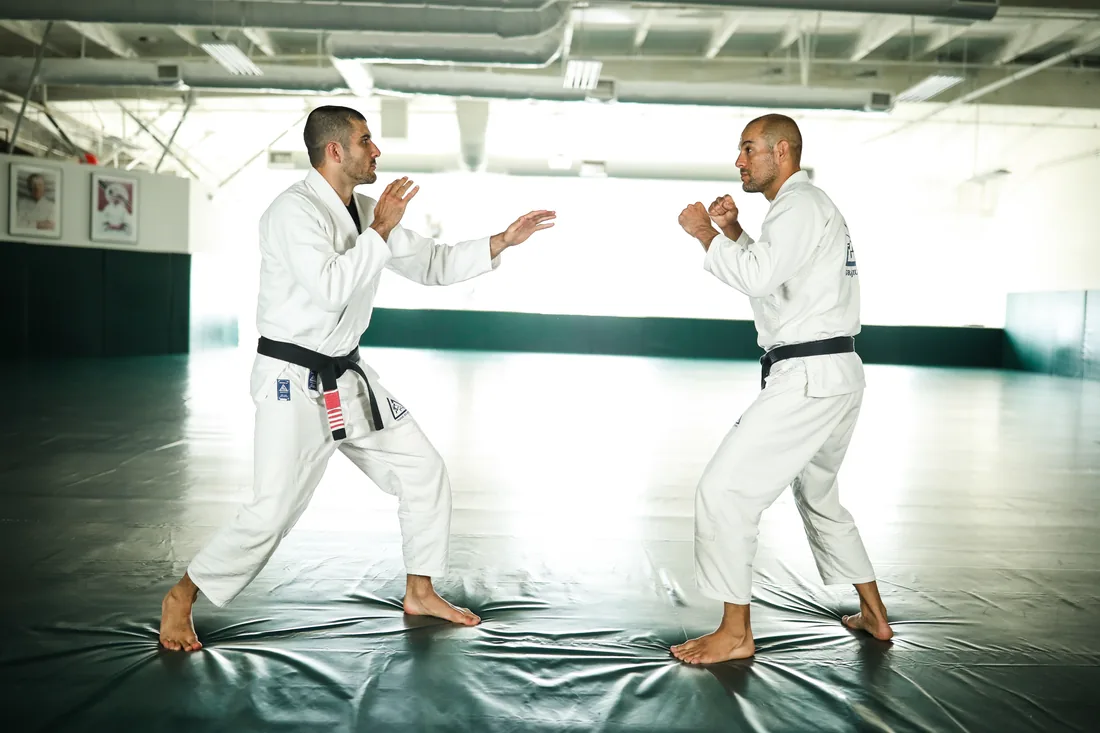
Both arts genuinely deliver structure, respect, and coordination, and many kids love them. The limitation is practical: their toolset is strikes. Even a well-trained child can’t safely or appropriately punch a classmate who’s shoving them — so the training often can’t be used precisely when it’s needed most. Forms and point-sparring also mean limited pressure-testing against realistic grabs and takedowns.
Kickboxing: great fitness, wrong tool for the schoolyard
Kickboxing classes are a terrific workout and fun for older kids. But everything above about striking applies double — there is no “control” option, only escalation. For teens interested in fitness it’s a fine complement; as a bullying solution it isn’t one.
Judo and wrestling: the honorable cousins
Both are excellent for children — leverage-based, safely practiced live, and genuinely confidence-building. Their emphasis differs from Jiu-Jitsu’s: judo centers on throws and wrestling on takedowns and pins, with less curriculum devoted to what happens when a child is grabbed, pinned underneath, or held down — the exact scenarios bullied kids describe. If your child has access to a great judo club, it’s a legitimate choice; the arts pair beautifully, and share DNA.
Brazilian Jiu-Jitsu: control without violence
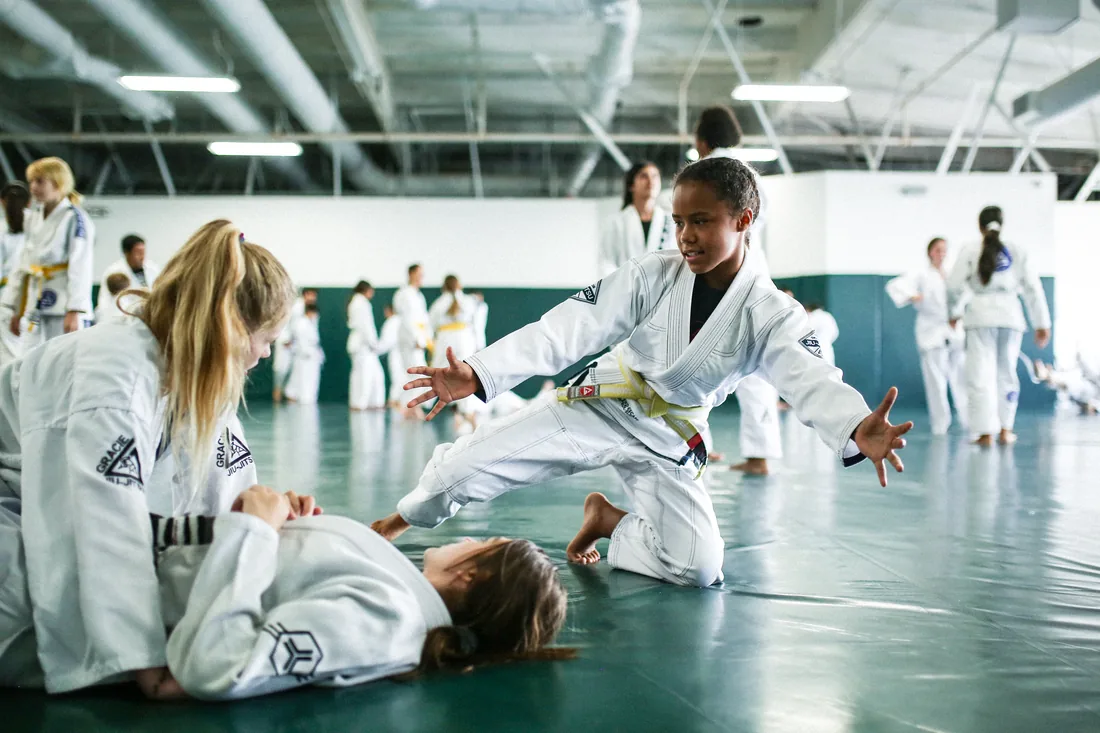
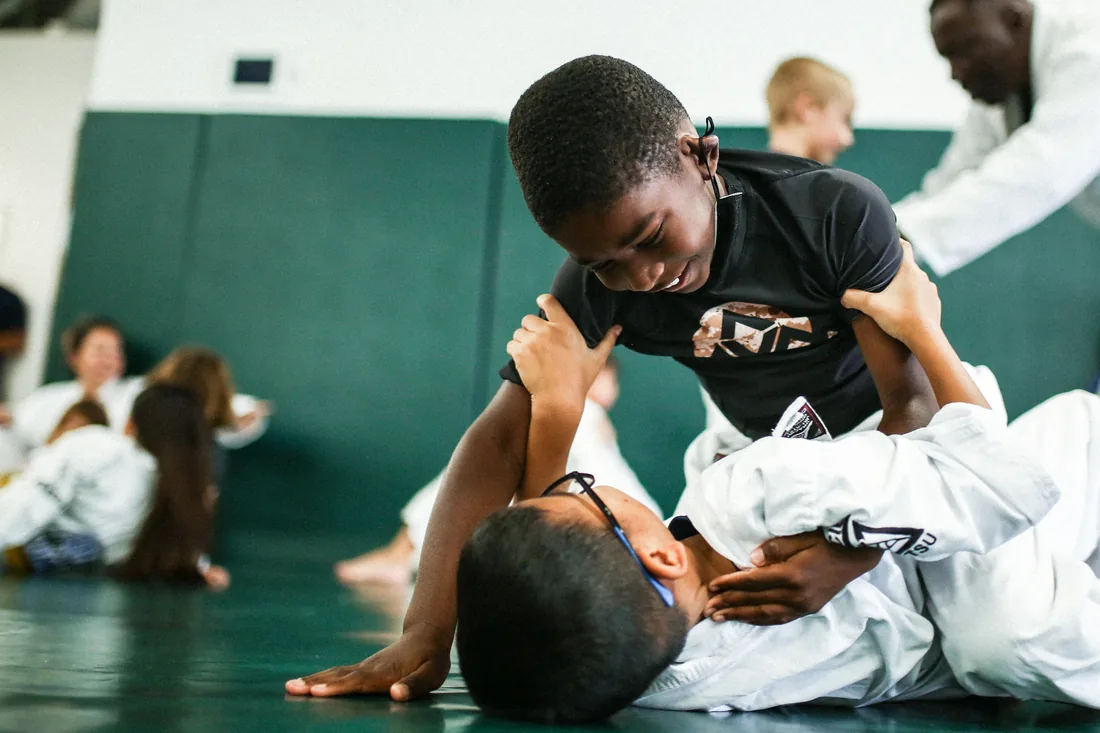
Jiu-Jitsu’s core promise fits childhood bullying almost perfectly: neutralize and control someone bigger and stronger without striking them. In the Gracie Bullyproof® system, kids learn verbal boundary-setting first, physical control second, and strikes never. Because grappling can be practiced at full engagement safely, the skills become genuine reflexes rather than choreography — and because it’s leverage-based, it works for the smaller, quieter kids who need it most.
A controlled study of school-based martial arts training found significant improvements in children’s cognitive and affective self-regulation, prosocial behavior, and classroom conduct versus standard physical education — with the largest gains among boys.Lakes & Hoyt, “Promoting self-regulation through school-based martial arts training,” Journal of Applied Developmental Psychology 25 (2004).
Match the program to the age, not just the art
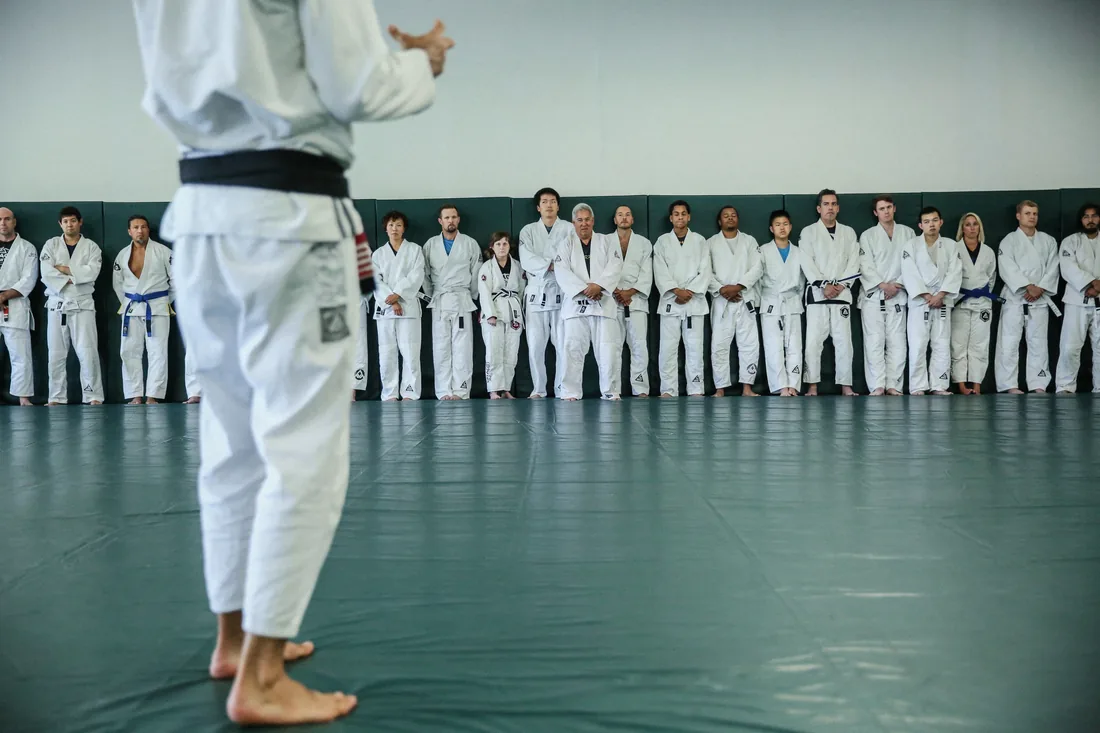
Whatever art you choose, age-banding is non-negotiable. Here’s how we structure it: Mat Munchkins® (ages 3–5) is parent-assisted and entirely game-based; Little Champs® (5–7) introduces real technique through play; Jr. Grapplers® (7–12) trains the full Bullyproof curriculum, including the verbal skills for handling a bully before anything gets physical. Families juggling schedules can also look at our after-school program. For a deeper dive into outcomes parents actually see, read our guide to the benefits of Gracie Jiu-Jitsu for kids.
Let your child be the judge
Reading comparisons only goes so far — kids know within one class whether they’ve found their place. Bring yours in on a free 10-day trial: unlimited classes in their age group, no card, no pressure, and you can watch every minute from the parents’ area of our Certified Training Center here in Warwick.
Frequently asked questions
What is the best martial art for kids?
For most families the honest answer is Brazilian Jiu-Jitsu — specifically a self-defense-first program like Gracie Bullyproof. It gives kids a non-violent way to neutralize bullying (control without punching or kicking), it works for smaller children against bigger kids, and classes are game-based rather than combat-based for young ages.
What age should a child start martial arts?
Structured programs exist from age 3, using games to build coordination, listening, and confidence. At Gracie Jiu-Jitsu Warwick, Mat Munchkins starts at 3–5, Little Champs at 5–7, and Jr. Grapplers at 7–12 — each age band trains separately with age-appropriate methods.
Is Jiu-Jitsu or karate better for kids?
They develop different skills. Karate builds discipline and striking form; Jiu-Jitsu builds control-based self-defense that works without hitting anyone — which matters, because a child who punches a bully is often the one suspended. For bully-proofing specifically, grappling-based control is the safer and more practical tool.
Is martial arts safe for young children?
In an age-appropriate, non-competitive program, yes. Look for age-banded classes, game-based instruction for the youngest kids, padded facilities, and a school that emphasizes cooperation over competition for beginners.