Taekwondo and Jiu-Jitsu show up on nearly every parent's shortlist, and for good reason — both are excellent, both build real discipline, and both have decades of track record with kids. But they are not interchangeable, and the honest differences matter more than the marketing similarities. Here's what each one actually teaches, so you can pick based on what your child needs, not just which sign is closer to home.
What Taekwondo actually teaches
Taekwondo is a striking art built around powerful, high kicks, hand strikes, and forms — memorized sequences of movements called patterns that are tested for belt promotion. Classes are typically high-energy, drilled in unison, and built around a strong tradition of etiquette: bowing, uniforms, and rank structure. Sparring, when introduced, uses pads and controlled contact at a distance. It is genuinely excellent for building explosiveness, flexibility, coordination, and respect for structure.
What Jiu-Jitsu actually teaches
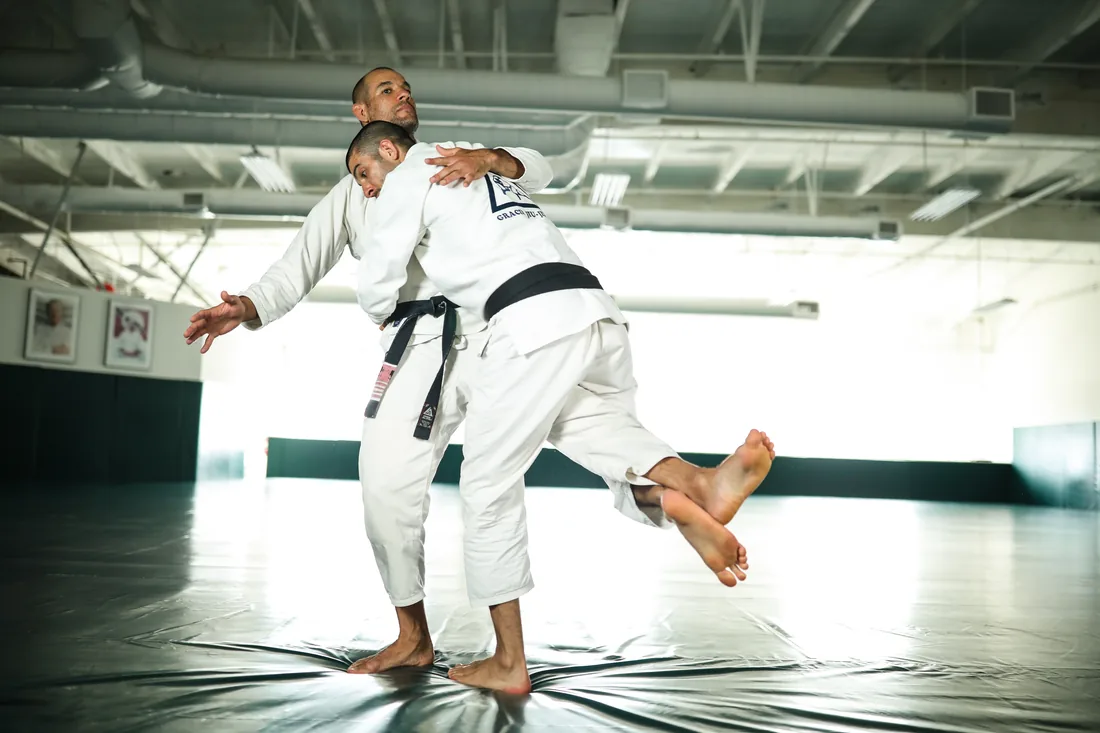
Jiu-Jitsu is the opposite mechanism entirely: a grappling art with no striking at all. Instead of hitting or being hit, your child learns to control a training partner's body through position, leverage, and technique. In the Gracie Bullyproof® curriculum specifically, that means learning to neutralize and control someone bigger — including verbal boundary-setting first — without ever throwing a punch or a kick.
A child who can neutralize a confrontation without striking avoids the escalation spiral that turns a shove into a fight — and avoids the disciplinary consequences that fall on the kid who threw a punch, even in self-defense.Gracie Bullyproof® instructional philosophy
Which one matches what actually happens on a playground
This is the question that should decide it. Real conflicts between kids on a playground almost never look like a kickboxing match at a controlled distance — they look like a grab, a shove, a tackle, or a kid pinned down. Taekwondo's striking-at-range skill set has limited application to that scenario. Jiu-Jitsu's entire curriculum is built around exactly that scenario: what to do when you're grabbed, held, or taken to the ground.
Which is the safer starting point for a smaller or younger kid
Taekwondo doesn't reward size the way some sports do, but it does reward speed, flexibility, and explosive athleticism — traits that develop unevenly across kids the same age. Jiu-Jitsu rewards patience and technique instead, which means a smaller, less coordinated, or younger child can genuinely succeed without needing to out-kick anyone. Removing striking from the equation also removes the most common source of bumps and bruises in combat sports generally.
You don't have to choose forever
Plenty of families do both, sequentially or side by side — the arts are complementary, not competing. But if you're picking a first martial art and your top priority is real self-defense for actual physical confrontations, grappling-based control is the more direct answer. If your priority is building explosive athleticism and a strong forms-and-ceremony tradition, Taekwondo is the stronger fit.
Age-appropriate either way
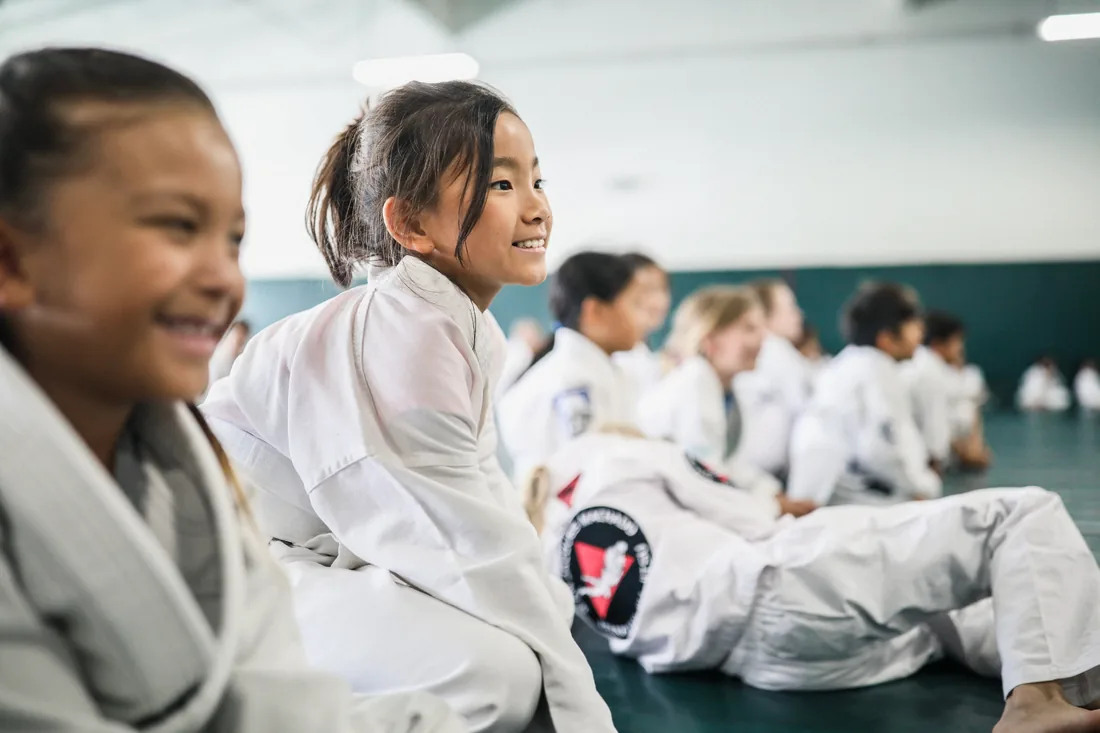
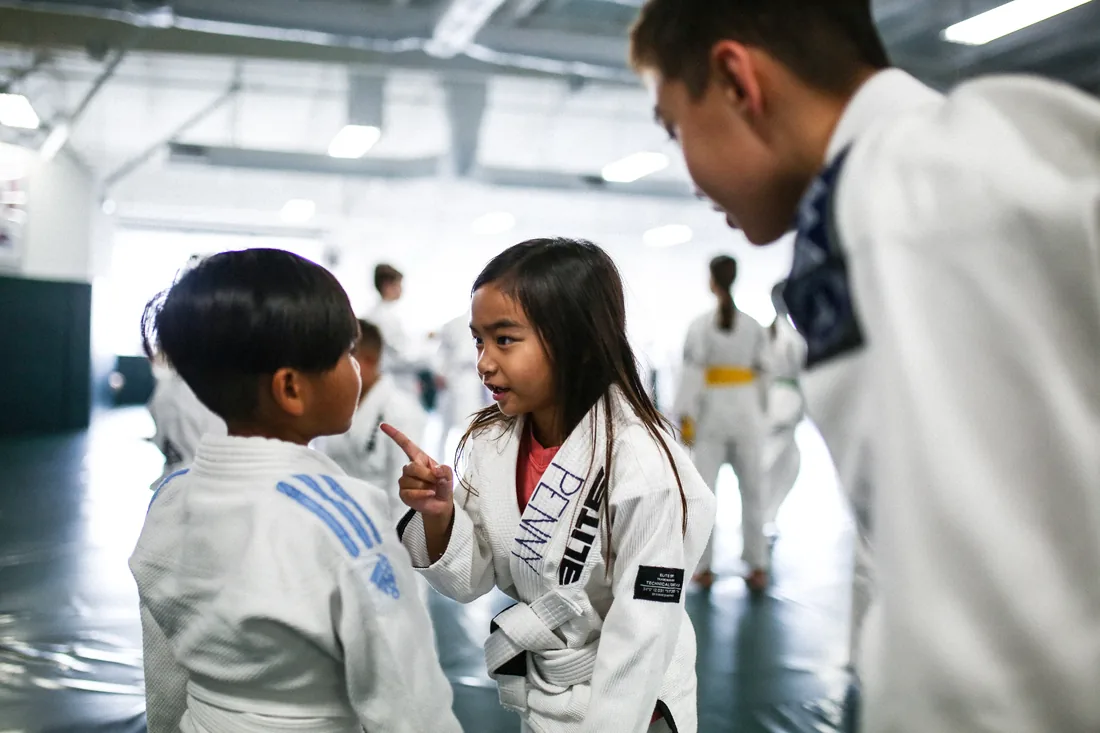
Whichever art you land on, age-banding matters more than the art's name. For a 5-year-old specifically, look for a class built entirely around that age — at Gracie Jiu-Jitsu Warwick that's Little Champs® (5–7), which introduces real technique through games, with Mat Munchkins® (3–5) even younger. For a broader look at how we compare other striking arts to Jiu-Jitsu for kids, see our Karate vs. Jiu-Jitsu comparison.
See which one fits your child
The fastest way to know is to watch your child in an actual class. Start a free 10-day trial at Gracie Jiu-Jitsu Warwick — unlimited classes in their age group, no card required, no pressure.
Frequently asked questions
Is Taekwondo or Jiu-Jitsu better for kids?
Neither is universally "better" — they teach different skills through different mechanisms. Taekwondo builds explosive kicking, structured forms, and ceremony-driven discipline. Jiu-Jitsu builds grappling-based control and self-defense without striking. For most parents whose top concern is real-world bullying and physical confrontations, Jiu-Jitsu's control-based approach maps more directly onto what actually happens — a grab, a shove, a kid pinned on the ground.
What's the difference between Taekwondo and Jiu-Jitsu?
Taekwondo is a striking art centered on kicks, punches, and patterns called forms, usually practiced against a partner at a controlled distance or against pads. Jiu-Jitsu is a grappling art with no striking at all — the focus is controlling a partner's body through position and leverage, which is trained safely at close range and, eventually, live.
Can a 5-year-old start Jiu-Jitsu instead of Taekwondo?
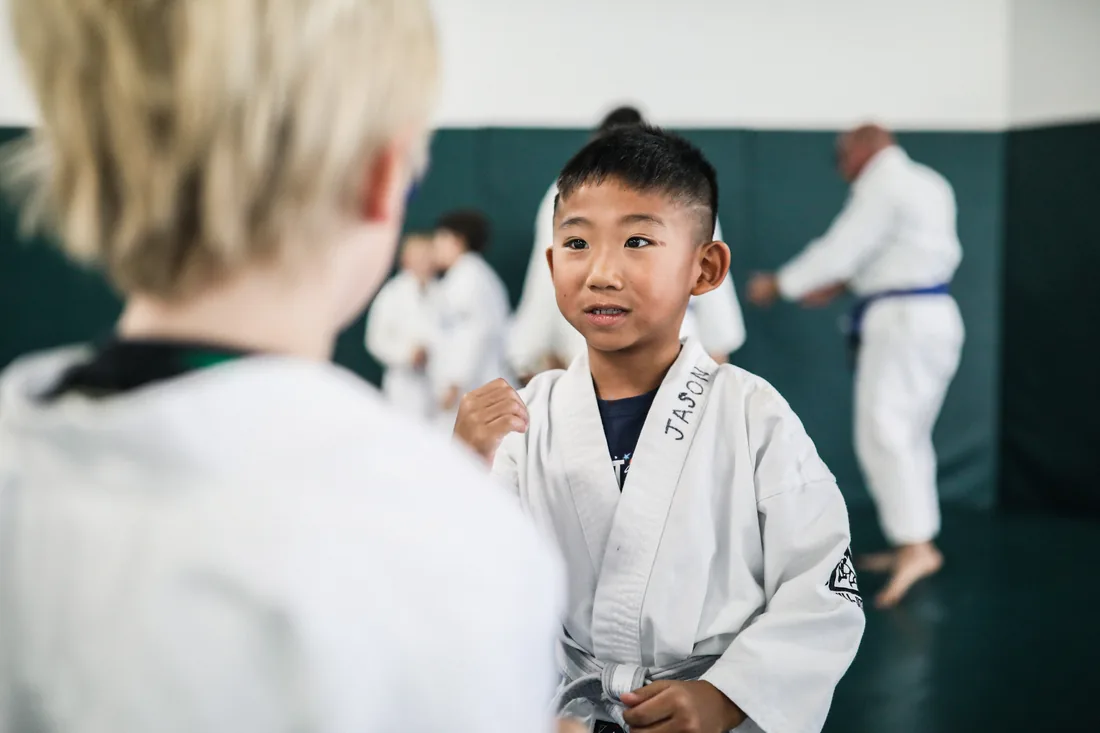
Yes. At Gracie Jiu-Jitsu Warwick, kids as young as 3 train in Mat Munchkins, and 5-year-olds move into Little Champs, which introduces real technique entirely through games and play, with no live sparring.
Do kids get hurt more often in Taekwondo or Jiu-Jitsu?
It depends far more on how a specific school teaches than on the art's name. That said, Jiu-Jitsu removes striking from the equation entirely, which removes the single biggest injury driver in combat sports generally — and a cooperative, age-banded curriculum keeps the remaining physical contact controlled and coached.