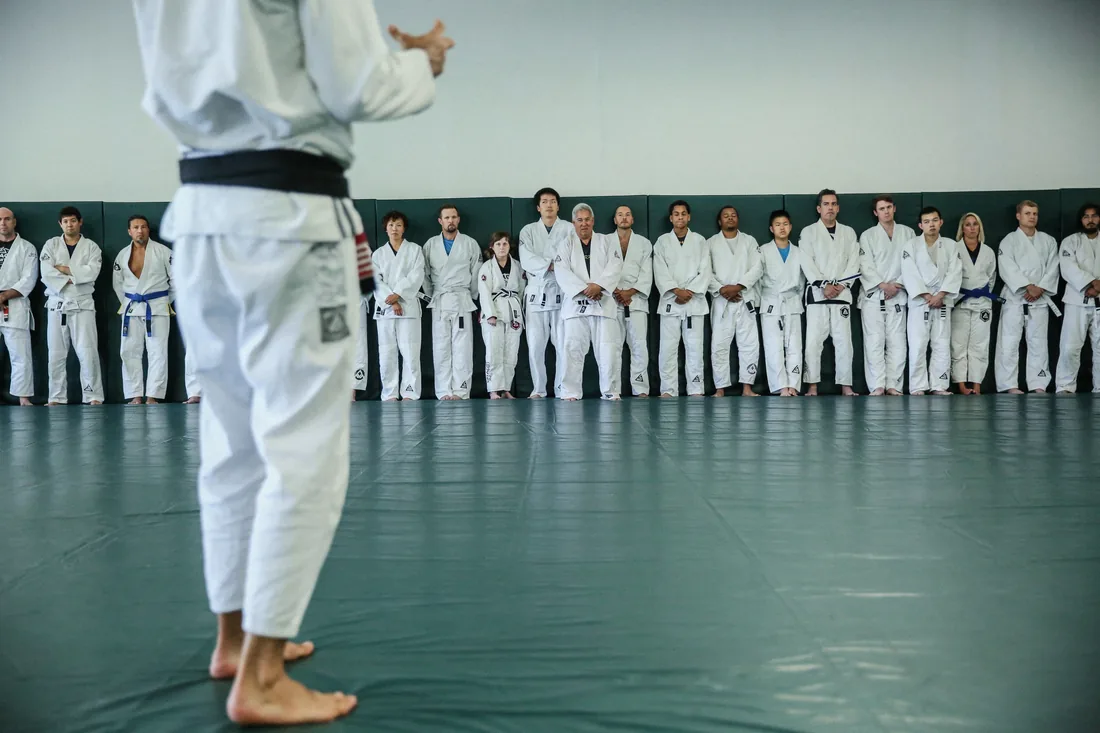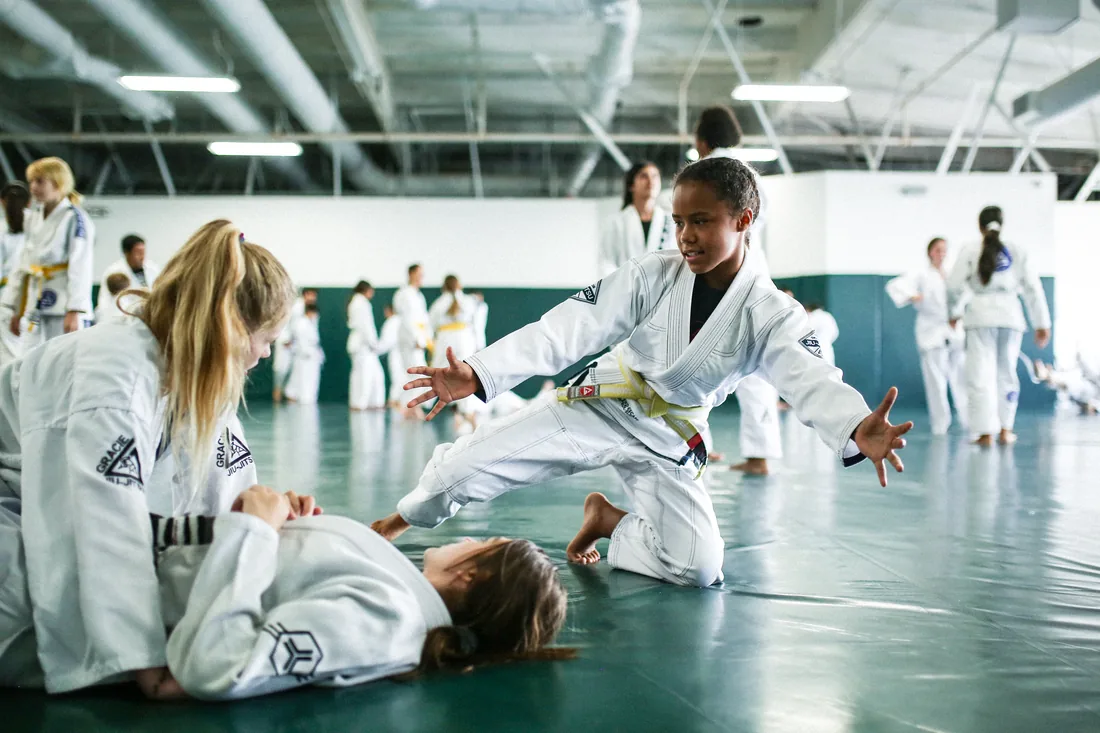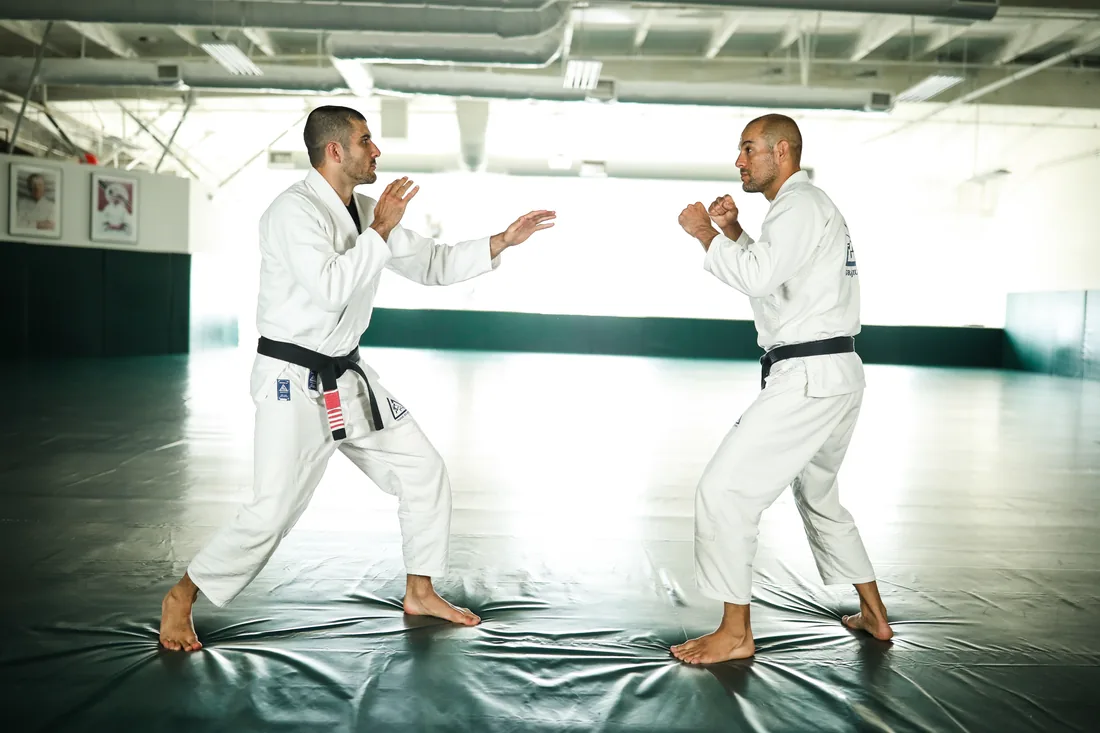
Few symbols in martial arts carry as much weight as a Brazilian Jiu-Jitsu belt — because few are as hard to shortcut. There are no belt-of-the-month promotions and no testing fees hurrying you along; the average adult spends about a decade earning a black belt. Here’s what every rank actually means, how long each realistically takes, and how the system works here at a Gracie Certified Training Center in Warwick.
The adult belt ranks at a glance
White belt: the most important belt you’ll ever wear
Every black belt was a white belt who didn’t quit. The white-belt phase is about building defensive fundamentals — escapes, posture, base, and the reflex to stay calm underneath a bigger person. In the Gracie system this phase is fully structured: the Gracie Combatives® program teaches 36 core self-defense techniques across 23 rotating lessons, so white belts always know exactly what to learn next. We’ve mapped this stage in detail in our guide to the white-to-blue belt progression.
Blue belt: the survival rank
A blue belt can reliably defend themselves against an untrained attacker — that’s the practical meaning of the rank. It usually arrives one to two years in, and it’s where the deep game begins: at this level you enter the Master Cycle®, the advanced curriculum organized into seven positional chapters from blue through black. Blue is also, famously, where the most students quit. The ones who push through almost always say the same thing: it stopped being about the belt.
Purple belt: the thinking grappler
Purple belts don’t just know techniques — they know systems: how positions chain together, how to direct where a grapple goes three moves ahead. Many academies consider purple the rank where a student could competently teach beginners. Expect roughly four to six years of consistent training to get here.
Brown belt: refinement
Brown is the polishing rank — closing the last gaps in your game, sharpening details, often mentoring lower belts. It’s typically a one-to-two-year station on the way to black, and by this stage training is simply part of who you are.
Black belt: a beginning, not an ending
A BJJ black belt represents roughly a decade of pressure-tested skill — and practitioners will tell you it feels less like a finish line than a license to keep learning. Black belts continue through degrees over the following decades. The scarcity is the point: because it can’t be bought or rushed, it certifies something real.
The IBJJF’s graduation guidelines codify minimum time-in-rank for adults — including at least two years at blue and one and a half at purple — which is one reason legitimate BJJ promotions cannot be compressed the way belt timelines in some other martial arts can.International Brazilian Jiu-Jitsu Federation, General System of Graduation.
Stripes, kids’ belts, and the Gracie Combatives belt
- Stripes: up to four per belt, marking progress within a rank — small, visible proof that the long road has waypoints.
- Kids’ belts: children under 16 progress through grey, yellow, orange, and green ranks. In our Gracie Bullyproof® program, kids’ promotions reward demonstrated technique and character, never attendance alone.
- The Combatives belt: unique to the Gracie system — an intermediate rank between white and blue, earned by formally demonstrating all 36 core self-defense techniques against standardized criteria. It makes the first promotion an objective test, not a subjective nod.
What matters more than the color
Belts are milestones, not the mission. The mission is the quiet confidence of knowing you can protect yourself and the people you love — and that shows up in months, not decades. Curious how fast? Here’s our honest answer to how long it takes to learn Jiu-Jitsu — or skip the reading and feel it yourself with a free 10-day trial at our Certified Training Center in Warwick.
Frequently asked questions
What are the belts in BJJ, in order?
For adults: white, blue, purple, brown, black. Each belt can also carry up to four stripes marking progress within the rank. Children under 16 progress through a separate system of grey, yellow, orange, and green belts before becoming eligible for blue at 16.
How long does it take to get a black belt in BJJ?
For a consistent adult student, roughly 8 to 12 years — longer than in most martial arts, which is exactly why a BJJ black belt carries the credibility it does. There are no shortcuts and no belt-mill promotions in a legitimate academy.
What is the hardest belt to earn in BJJ?
Most practitioners say blue belt — not because the standard is highest, but because it demands the biggest transformation: from a complete beginner to someone with reliable defensive fundamentals. It's also where the largest share of students quit; earning it is a genuine filter.
Do belts matter for self-defense?
The belt itself doesn't — the tested skill it represents does. In the Gracie system, promotion is tied to demonstrating defined techniques against evaluation criteria, so each rank certifies something concrete about what you can actually do under pressure.