“How long until this actually works?” It’s the most honest question a new student can ask, and it deserves an honest answer — not the vague “everyone’s journey is different” you’ll hear at many schools. The truth: learning Jiu-Jitsu well enough to protect yourself is a months-scale project, not a years-scale one — if you train in a structured curriculum. Here’s the realistic timeline, stage by stage.
The one distinction that changes everything: competence vs. mastery
People conflate two very different goals. Self-defense competence means that if an untrained person grabbed, tackled, or swung at you, your response would be automatic and effective. Mastery means prevailing against other trained grapplers. Mastery takes many years. Competence does not — and for most people in Warwick asking this question, competence is the actual goal.
Months 0–2: the fundamentals feel foreign, then suddenly click
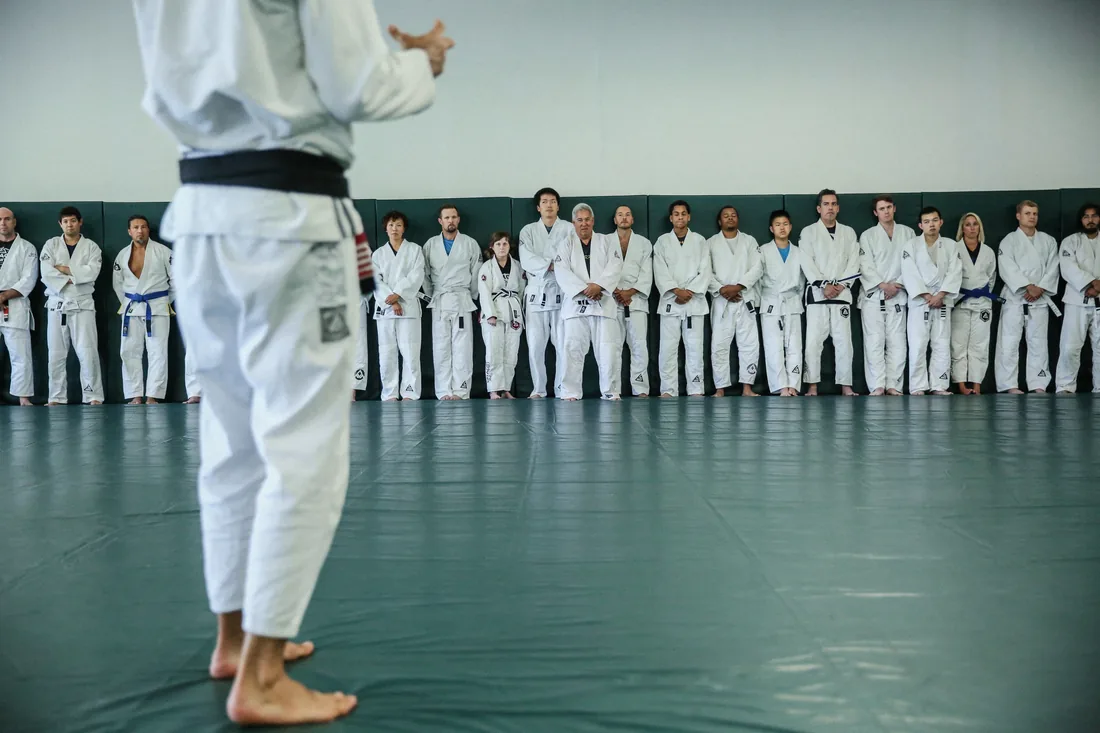
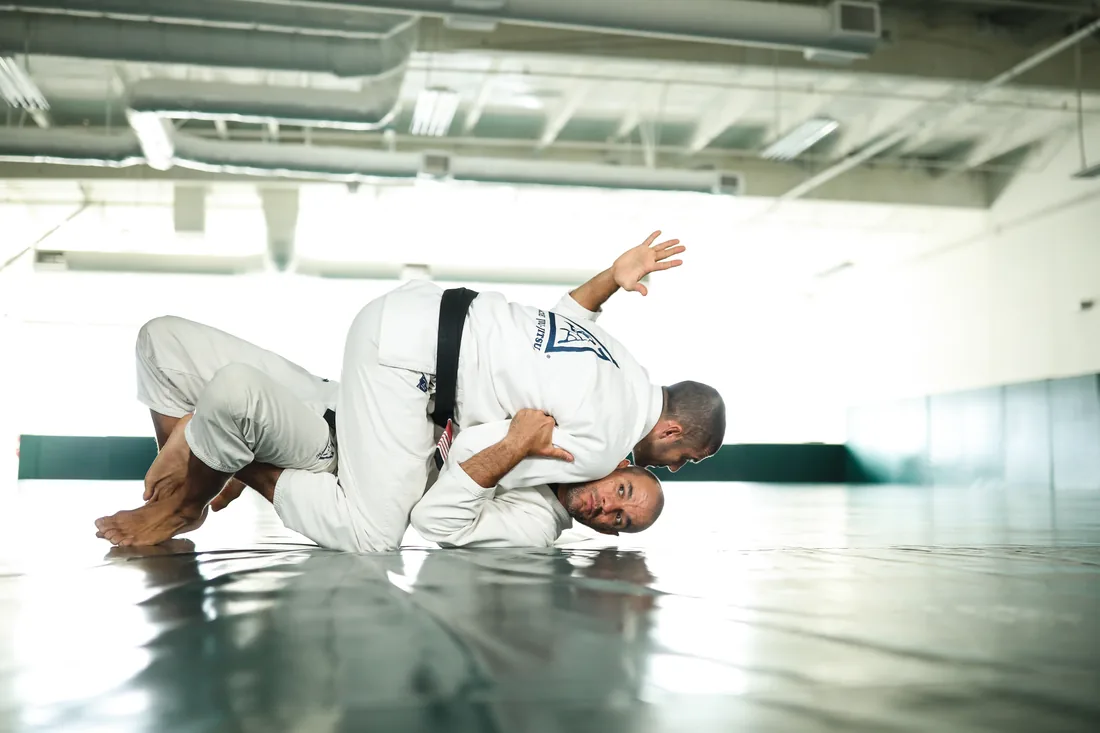
Your first weeks are about vocabulary — learning what a mount, a guard, and a clinch are, and what your body is supposed to do in each. In a cooperative program like Gracie Combatives®, every class teaches one defined lesson from a 23-lesson rotation, so there is no wrong day to start and no class where you’re lost. Most students report the first “click” — a technique working effortlessly against a resisting partner in a drill — inside their first month. If you’re curious what day one actually looks like, we’ve written an honest walkthrough of your first Jiu-Jitsu class.
Months 3–8: reflexes replace thinking
This is where structured repetition pays off. Each of the 36 Combatives techniques comes back around in the lesson rotation multiple times, in slightly different combinations, until you stop consciously recalling steps and start simply reacting. Students who train two to three times per week typically complete each technique the recommended number of times within this window. This is also the phase where the fitness by-products show up: better grip, better hips, better cardio — without a single treadmill.
Motor-learning research consistently shows that distributed practice — shorter sessions spread across weeks — produces more durable skill retention than the same hours crammed together, which is why a steady 2–3 classes per week outperforms occasional marathon sessions.Schmidt & Lee, Motor Control and Motor Learning, 6th ed.
Months 8–12: the Combatives belt — a defined, testable standard
Unlike schools where promotion depends on a coach’s mood, the Gracie curriculum ends this phase with an objective milestone: the Combatives belt qualification, where you demonstrate all 36 techniques — individually and in freestyle combinations — against standardized evaluation criteria. Earning it means something concrete: your self-defense reflexes have been tested, not assumed. This is the “I can protect myself” line, and most consistent students cross it in 8 to 12 months.
Year 2 and beyond: the Master Cycle, sparring, and the long game
After the Combatives belt, students enter the Master Cycle® — the advanced curriculum from blue belt to black belt, organized into seven positional chapters. Live sparring is introduced here, thoughtfully and progressively, after your foundation is already built. This ordering matters: sparring from day one (common at sport-focused gyms) teaches beginners to survive against experts before they’ve learned to defend against amateurs — backwards, if self-defense is the goal. We’ve written more about why cooperative training beats early sparring for beginners.
From there, the timeline stretches as far as you want to take it. Blue to purple typically takes a committed student two-plus years; the full journey to black belt averages around a decade. For a rank-by-rank breakdown, see our guide to the BJJ belt system.
What actually determines your speed
- Consistency, not intensity. Two to three classes a week, every week, beats five classes one week and none the next.
- A structured curriculum. A defined lesson rotation means zero wasted classes; random-technique-of-the-day schools stretch the same progress over years.
- Cooperative drilling. You learn faster when your partner helps you get the reps right instead of trying to beat you.
- Showing up before you feel ready. The students who progress fastest are rarely the most athletic — they’re the ones who started.
Start the clock this week
A year from now, you’ll either have trained reflexes or you won’t — the timeline starts whenever you do. As a Gracie Certified Training Center here in Warwick, we teach the exact structured curriculum described above, and you can test-drive it with a free 10-day trial — unlimited beginner classes, no card, no commitment.
Frequently asked questions
How long does it take to learn Jiu-Jitsu for self-defense?
With consistent training (2–3 classes per week), most adults develop genuine, usable self-defense competence in 8 to 12 months. In the Gracie Combatives program that milestone is concrete: 36 core techniques learned across 23 structured lessons, each one repeated until it becomes reflex.
How long does it take to get good at Jiu-Jitsu?
It depends on your definition. Defending yourself against an untrained attacker: under a year. Holding your own in live sparring with experienced training partners: two to four years. Mastery is a lifelong pursuit — which is exactly why people stay on the mats for decades.
How many days a week should a beginner train Jiu-Jitsu?
Two to three classes per week is the sweet spot for beginners — frequent enough that techniques stick, sustainable enough that you don't burn out or accumulate nagging injuries. Consistency over months beats intensity over weeks, every time.
Can I learn Jiu-Jitsu at any age?
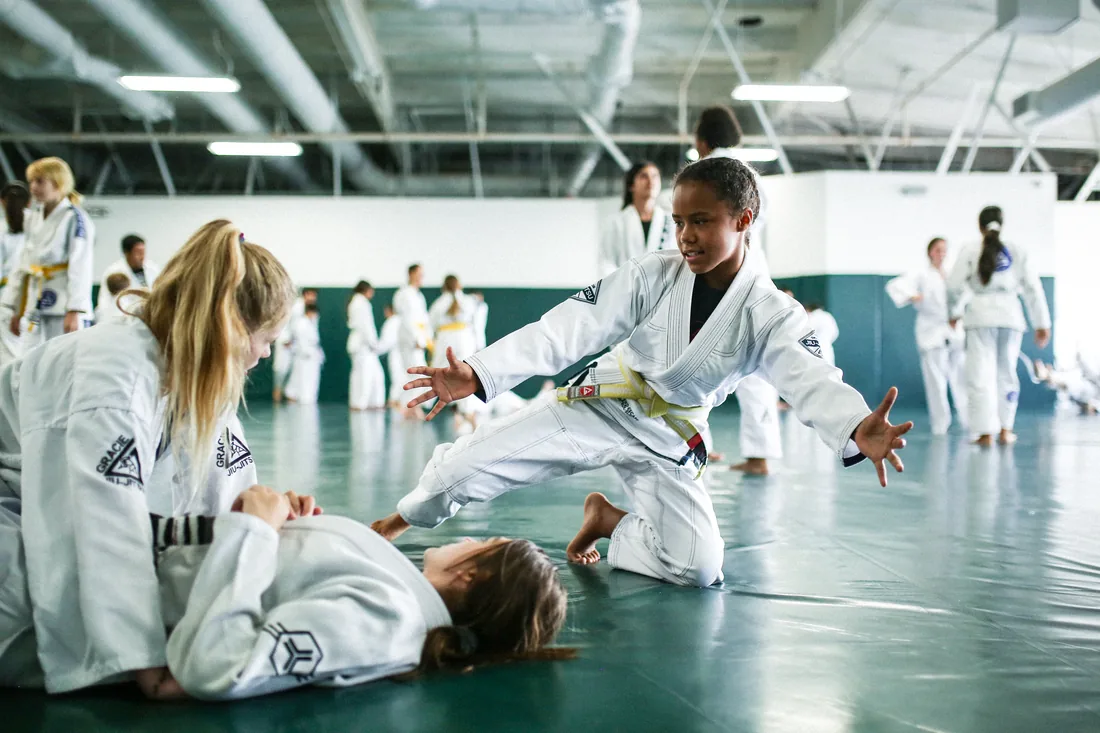
Yes. Because Jiu-Jitsu is built on leverage and timing rather than strength or speed, adults start successfully in their 40s, 50s, and beyond. Students at Gracie Jiu-Jitsu Warwick range from age 3 to 67+.