Search “self-defense classes near me” from anywhere in Rhode Island and you’ll get a jumble: one-night workshops, Krav Maga intros, boxing gyms, women’s seminars, and martial arts schools of every flavor. They are not interchangeable. Having taught self-defense in Warwick for years — and having watched students arrive from most of the other options — here’s the honest map of what each path actually delivers, and how to pick the right one for you or your family.
First, the question that sorts everything: skill or awareness?
Every self-defense option in Rhode Island falls somewhere on a line between awareness training (recognizing risk, setting boundaries, de-escalating) and skill training (physical reflexes that function under adrenaline). Awareness can be taught in an afternoon. Skill cannot — it’s built the same way as swimming or driving: repetition over months. Neither is wrong; problems come when a two-hour seminar is mistaken for the second thing.
Your actual options in Rhode Island
One-day seminars and community workshops
Libraries, employers, and community centers around Providence, Warwick, and Cranston periodically host self-defense workshops, and police departments and universities in the region offer women’s programs in the R.A.D. (Rape Aggression Defense) mold. Genuinely valuable for awareness, risk recognition, and a first exposure — and usually free or cheap. Their limit is retention: physical techniques practiced once don’t survive contact with adrenaline months later. Take one; just don’t stop there.
Krav Maga and combatives gyms
Krav Maga markets itself as pure self-defense, and its mindset training — aggression, awareness, escape — has real value. Quality varies enormously by school, though, because much of the curriculum can’t be pressure-tested safely: you can’t practice eye gouges and groin strikes against a fully resisting partner. Skill quality ends up depending heavily on the individual instructor. If you go this route, visit the school and watch how (and whether) they train against real resistance.
Boxing and kickboxing gyms
Rhode Island has proud boxing roots and some excellent gyms. Boxing delivers real conditioning, distance management, and composure under pressure — genuinely useful attributes. As a complete self-defense system it has gaps: no answer for grabs, clinches, or the ground, and its one tool (striking) is the legally and ethically riskiest option in a civilian confrontation. Great supplement; incomplete foundation.
Sport BJJ academies
The Providence–Warwick corridor has a healthy sport Jiu-Jitsu scene — we’ve profiled the standouts in our guide to the best BJJ schools in Rhode Island. Sport-focused academies build real grappling skill, though their competition orientation means punches, weapons, and multiple-attacker scenarios often get less curriculum time. Superb if you fall in love with the sport; check how much self-defense is actually on the syllabus.
Curriculum-based self-defense Jiu-Jitsu
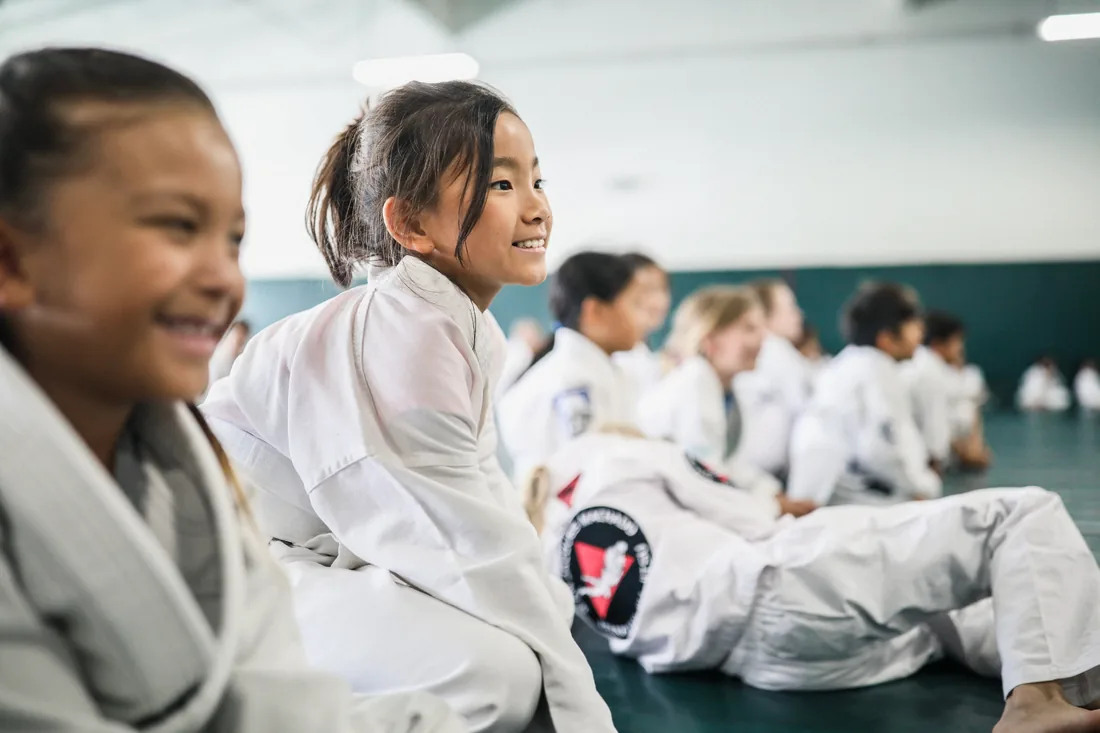
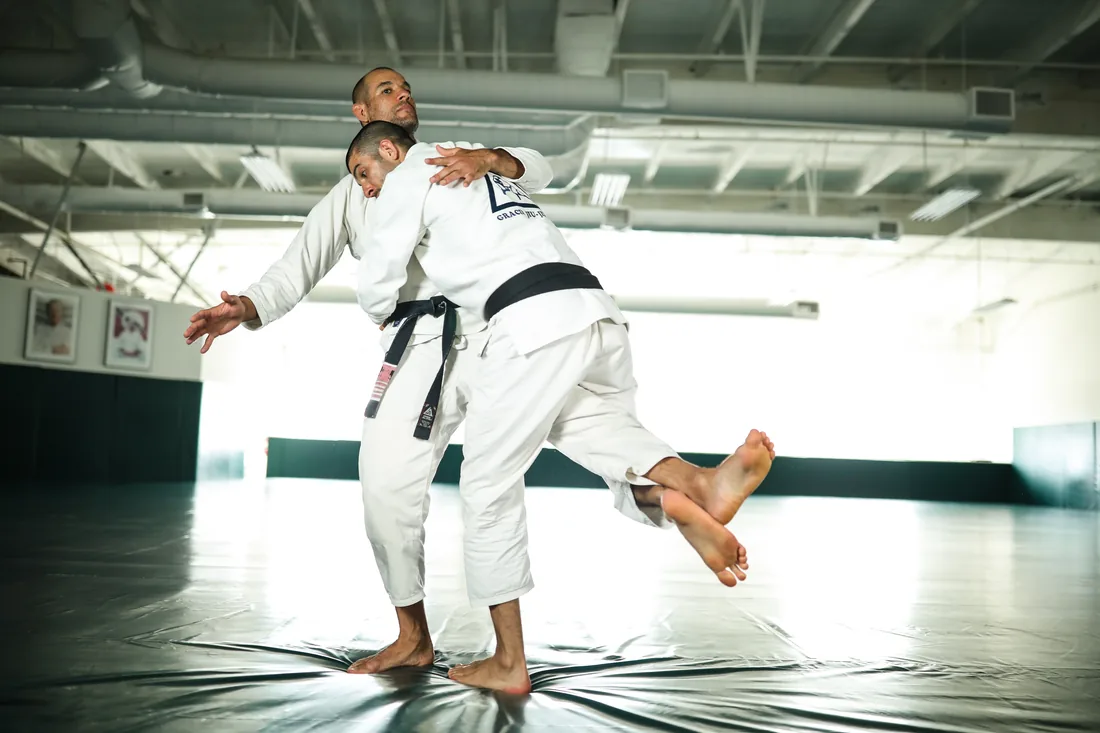
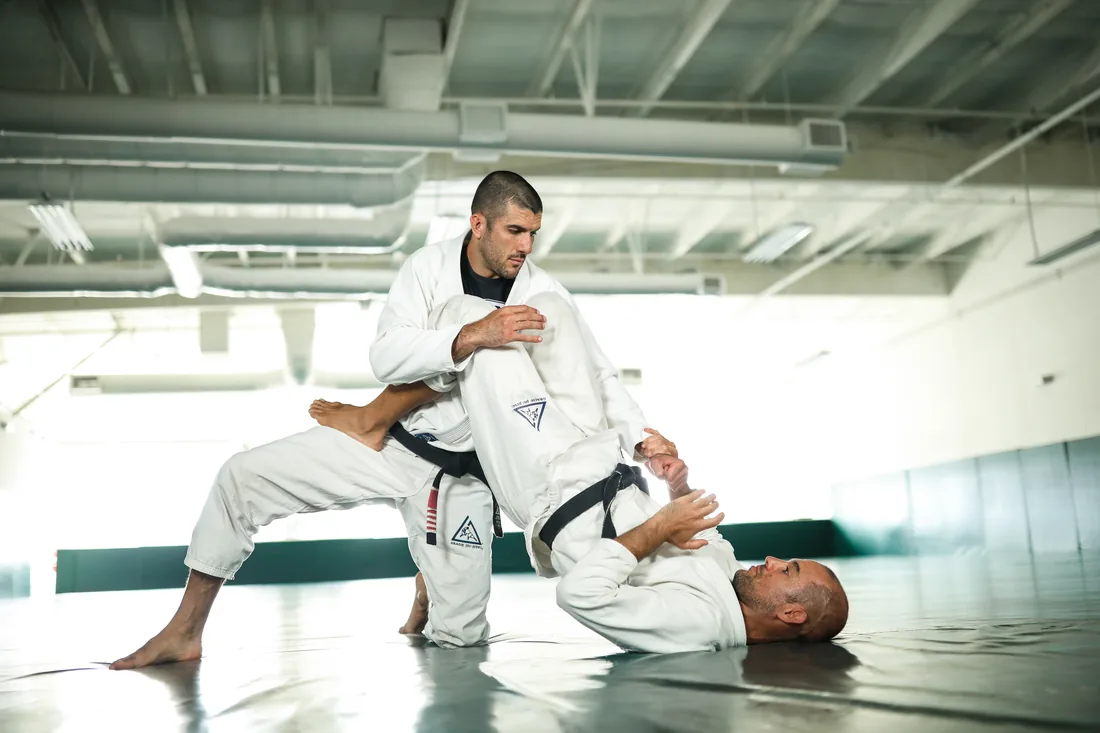
This is the category built specifically for the question this article answers — defined lesson plans, techniques chosen for real-world scenarios (including strikes and standing grabs), drilled cooperatively until they’re reflexes, with objective evaluation standards. It’s what we teach in Warwick as a Gracie Certified Training Center: Gracie Combatives® for adults, Women Empowered® for women-specific threats, and Gracie Bullyproof® for kids. The trade-off is honest: it takes months, not an afternoon. That’s also why it works — here’s exactly how long.
How to choose (a 5-question checklist)
- Is there a written curriculum? If nobody can tell you what you’ll learn in lesson four, progress will be accidental.
- Can it be practiced against real resistance, safely? This single question separates technique that survives adrenaline from technique that doesn’t.
- Does it work for the smaller person? Ask what happens when the attacker is 60 pounds heavier. Leverage-based answers beat strength-based ones.
- Does it cover before, during, and after? Boundary-setting and de-escalation matter as much as the physical layer — and control matters more than damage, legally and morally.
- Can you try before committing? Any confident school will let you experience real classes free.
Whatever you choose, start
The worst self-defense plan in Rhode Island is the one still sitting in a search tab. If a structured, test-it-yourself path appeals to you, our free 10-day trial includes unlimited beginner classes across every program — adults, women, and kids — right here in Warwick, minutes off I-95 and Route 117.
Frequently asked questions
What are the best self-defense classes in Rhode Island?
It depends on your goal. For lasting, pressure-tested skill, a curriculum-based program like Gracie Combatives or Women Empowered (taught at certified centers such as Gracie Jiu-Jitsu Warwick) builds reflexes over months. One-day seminars and awareness courses are useful introductions but don't create retained physical skill by themselves.
Are self-defense seminars worth it?
As awareness-builders, yes — a good seminar teaches risk recognition and boundary-setting. But physical technique practiced once is largely gone within weeks. Treat seminars as a starting point, not a finish line.
What self-defense class should women take in Rhode Island?
Look for a women-specific, scenario-based curriculum with repeated practice — not a one-off workshop. The Women Empowered program in Warwick addresses the 15 most common threats against women using leverage-based technique, drilled weekly in a supportive environment.
Is Jiu-Jitsu good for self-defense?
It's widely considered the most reliable base for civilian self-defense because it works against bigger attackers, covers the clinch and the ground where real altercations end up, and can be practiced safely against genuine resistance — which is what turns technique into reflex.