Kickboxing and Brazilian Jiu-Jitsu are the two answers you’ll hear most when someone in Warwick asks about training for fitness and self-defense — and they could hardly be more different. One is percussive, fast, and cardio-forward; the other is grinding, technical, and leverage-based. We teach Jiu-Jitsu, so you know our lane — but plenty of our students came from (and still love) kickboxing, so here’s the fair comparison we give them.
The 60-second answer
- Pure cardio burn, striking fitness, bag work you can lose yourself in: kickboxing.
- Self-defense that handles grabs, clinches, and the ground — and works for smaller people: Jiu-Jitsu.
- Training you can keep doing at 50, 60, and beyond: Jiu-Jitsu.
- The complete martial artist: honestly, both — grappling base first.
As a workout
No contest on intensity — both will leave you soaked. Cardio kickboxing is interval training with gloves: rounds of strikes on pads or bags that push heart rate high and burn several hundred calories an hour. Jiu-Jitsu’s load is different — closer to a full-body resistance session, with anaerobic bursts, constant core engagement, and grip work — and because your mind is occupied solving the puzzle in front of you, the hour disappears. The deeper difference is retention: bag rounds can get repetitive; Jiu-Jitsu’s endless technical depth is why so many people who “tried everything” are still on the mats a decade later. We break down the fitness case in our guide to the benefits of BJJ for adults.
As self-defense
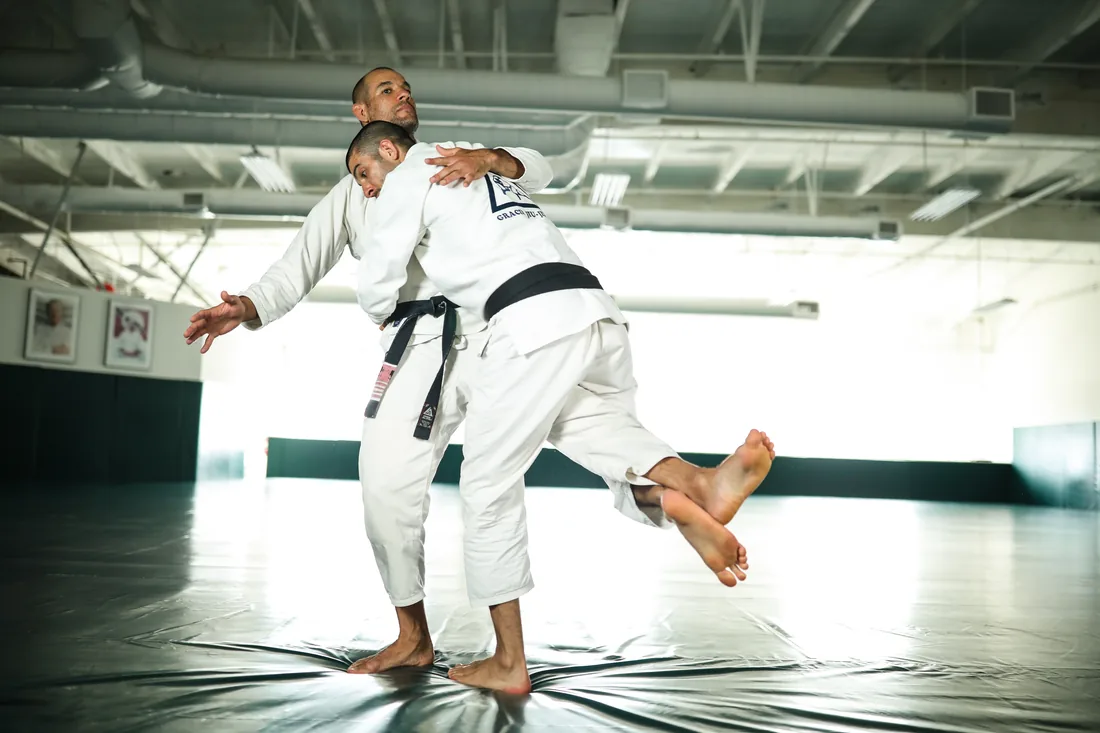
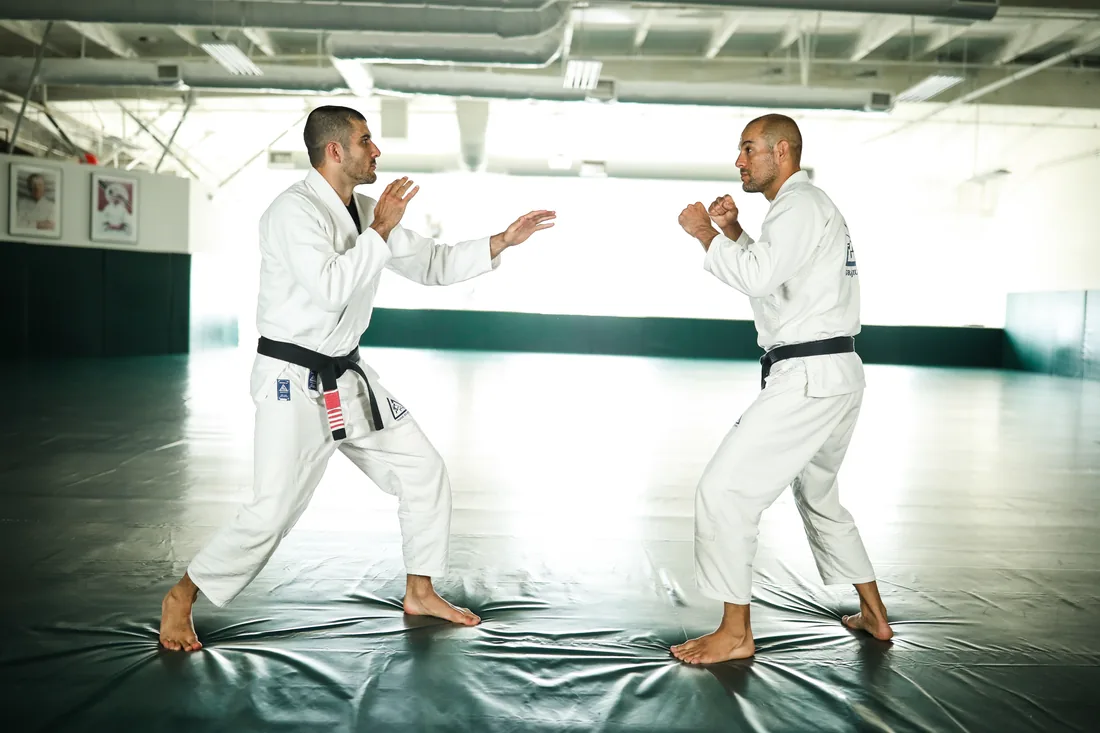
Here the arts genuinely diverge. Kickboxing’s toolkit assumes distance and trading strikes — useful skills, but most real confrontations start closer (a grab, a shove, a tackle) and collapse into a clinch or the ground within seconds. That range is Jiu-Jitsu’s entire specialty. Three practical differences decide it for most people:
- The size problem. Striking power scales with size; leverage doesn’t. A smaller person out-striking a larger attacker is a bad bet — controlling them with leverage is a proven one.
- The control option. Jiu-Jitsu lets you pin and neutralize someone — a drunk relative, a schoolyard bully, an aggressive stranger — without injuring them. Striking offers only escalation, with the legal and moral weight that carries.
- Pressure-testing. You can grapple a fully resisting partner safely every single class. You cannot safely take full-power head strikes every class. Skills you can rehearse realistically are the ones that show up under adrenaline.
It’s the same conclusion we reached comparing striking arts more broadly in the best martial art for self-defense — and it’s why Gracie Combatives® teaches punch defense from day one rather than punching.
For kids
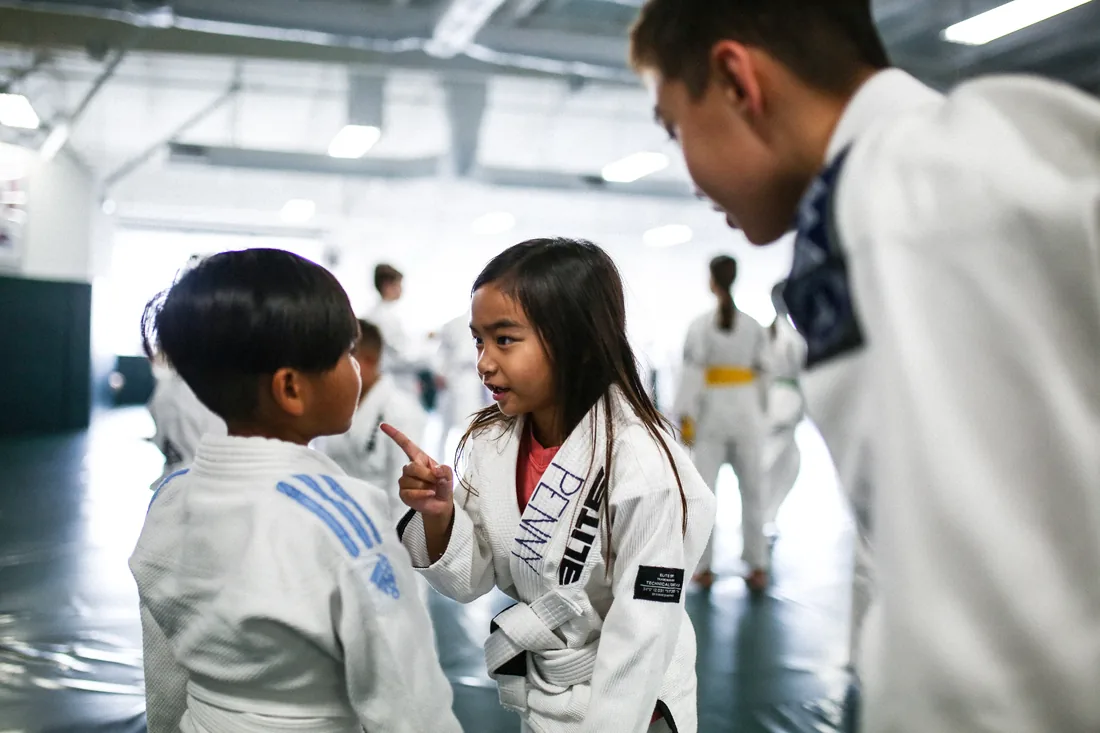
For children the calculus tilts even harder toward grappling. A kid who kicks a bully is a kid in the principal’s office; a kid who calmly controls one until an adult arrives is a success story. That’s the entire premise of Gracie Bullyproof® — non-violent control, drilled through games. Our full breakdown for parents: the best martial arts for kids.
For adults over 40
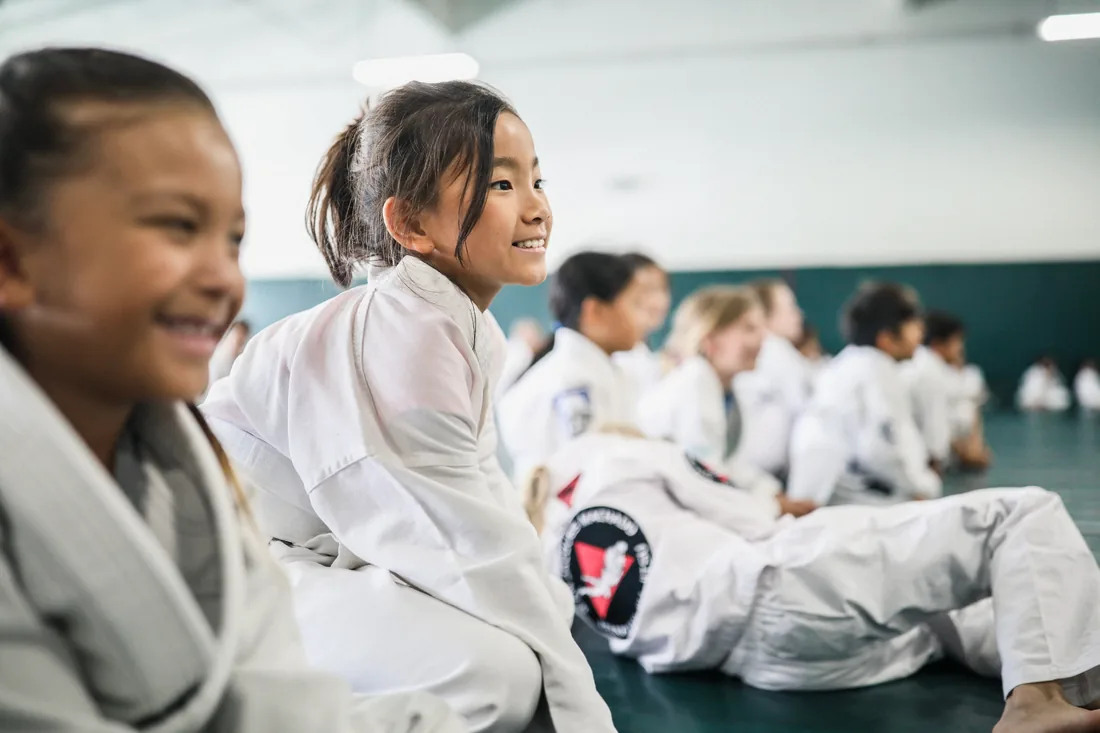
Cardio kickboxing classes age well; contact kickboxing generally doesn’t — repeated impact and explosive hip torque are a lot to ask of 50-year-old joints. Cooperative Jiu-Jitsu was practically designed for this demographic: intensity you set, no head contact, and technique that compounds while athleticism fades. It’s a big part of why our Warwick mats hold students from 3 to 67+ — more in starting martial arts as an adult.
The honest bottom line
If you want a striking workout, take the kickboxing class — it’s a great one. If you want self-defense that works at every range, for every size, at every age — and a practice deep enough to hold your interest for decades — build your base on the mats. Better yet, test the claim yourself: our free 10-day trial gets you unlimited beginner classes at Warwick’s only Gracie Certified Training Center. Wear comfortable clothes; here’s what to wear.
Frequently asked questions
Which is better for self-defense, kickboxing or Jiu-Jitsu?
Jiu-Jitsu, for most people. Kickboxing sharpens striking at a distance, but most real altercations close into grabs, clinches, and the ground — exactly where Jiu-Jitsu lives and kickboxing has no answer. Jiu-Jitsu also offers control without injuring anyone, which striking can't.
Is kickboxing or BJJ a better workout?
Both are outstanding. Cardio kickboxing delivers a high-intensity, high-calorie session; Jiu-Jitsu adds full-body resistance, grip strength, and mobility, and its problem-solving keeps people training for years — the workout you keep is the one that wins.
Can I do both kickboxing and Jiu-Jitsu?
Absolutely — they're complementary. Striking teaches distance management; grappling covers the clinch and ground. Many practitioners cross-train. If you must pick one first for self-defense, build the grappling base, then add striking.
Which is safer to train, kickboxing or Jiu-Jitsu?
Cooperative Jiu-Jitsu is generally gentler long-term: no repeated head impact, and intensity you control. Contact kickboxing sparring carries cumulative striking wear; cardio-only kickboxing is safe but doesn't build usable defense.